
Education plays a major role in determining income levels in Sri Lanka. Individuals with higher educational qualifications generally have access to better-paying jobs, greater career opportunities, and improved job security. Those who complete A/Levels, diplomas, degrees, or professional qualifications are often employed in sectors such as finance, information technology, engineering, healthcare, and management, where salaries are significantly higher than in many entry-level or unskilled occupations. Higher education also helps individuals develop specialized knowledge, communication skills, and problem-solving abilities that employers value, making them more competitive in the job market.
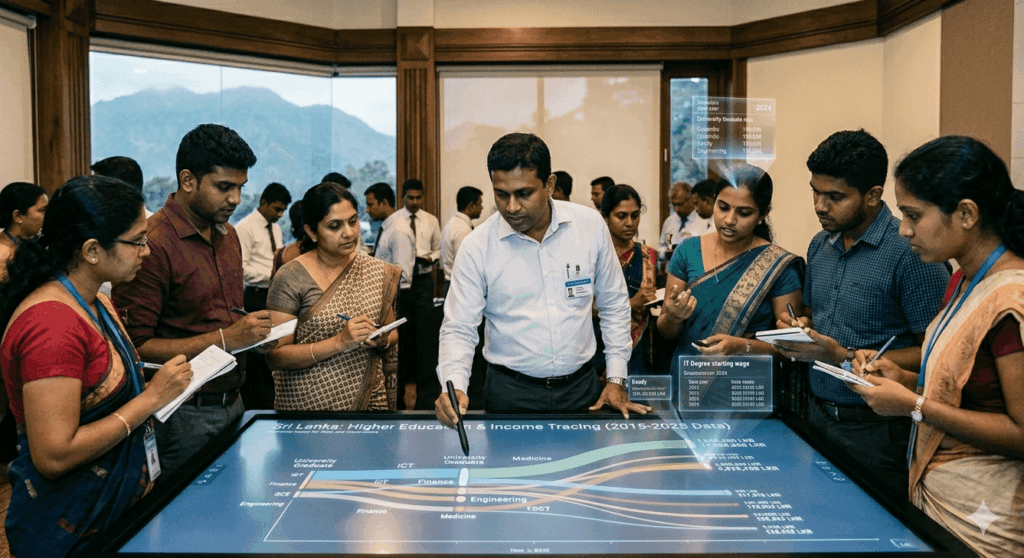
The relationship between education and income exists because employers are willing to pay more for skilled and qualified workers who can contribute to productivity and business growth. Graduates and professionals often have opportunities for promotions, leadership positions, and international employment, which further increases earning potential. In contrast, individuals with lower levels of education may face limited career options and lower wages.
As Sri Lanka continues to develop a knowledge-based economy, investing in education remains one of the most effective ways for individuals to improve their income, achieve financial stability, and enhance their long-term career prospects.
